Early on Tues., June 10, it was still foggy in Northport, Long Island, as we said goodbye to John and Pat (“Patti Anne”) and began our way – in and out of rain – back to NY Harbor.

We were doing 12 knots though at idle through Hell’s Gate (narrow tidal strait in the East River)! We saw the Roosevelt Island Tramway …

… and then proceeded through lower Manhattan to NY Harbor and the entrance to Liberty Landing Marina. The Colgate Clock (pictured with “Til You Can’t” and a ferry near it) sits by the entrance to the marina and is located in Jersey City, NJ.

By the time we reached the marina the rain had stopped, so after docking, we were able to walk around, starting with an amble through the bygone Central Railroad of New Jersey terminal building. Two-thirds of the 12 to 17 million immigrants, after passing through Ellis Island, boarded a train here for a destination outside of New York or New Jersey.
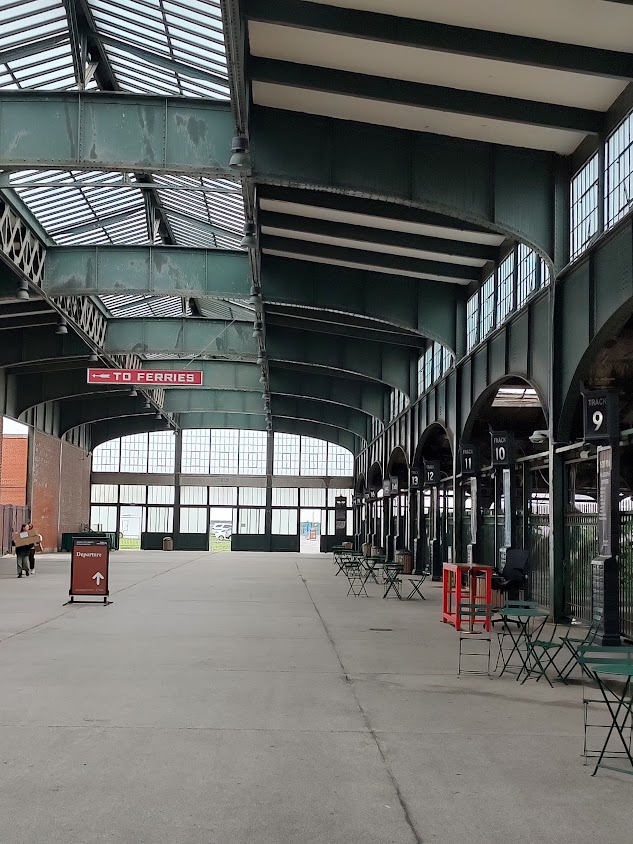

The remaining one-third took ferries to their journey’s end. To get on our shuttle the next day (Wed., June 11) to take us the short way to Ellis Island, we first lined up next to the old ferry docks outside of the railyard.


From the ferry, we had a good waterside view of the railroad terminal/old ferry docks.

Here is another picture, this one taken later that day.

From the deck of the ferry that morning, we soon caught a glimpse of Ellis Island.

Though we took the first morning ferry to Ellis Island, we didn’t leave until early afternoon, as there was so much to see and information to absorb. Below are a few images from inside the buildings, including the Great Hall and a ship’s manifest.


We had a quick lunch at the cafe, eating at a table across from some folks who appeared to have already visited the Statue of Liberty …

… then boarded another ferry to take us to the Statue.

At the Statue of Liberty, tourists can visit the museum there plus walk on a path, like we did, that makes a wide circle around the Statue. For an extra fee, one can gain a closer look from the pedestal (people doing so pictured behind us in following photo).

Visitors can also pay to go in the crown but cannot tour the torch. The original (but modified) torch is on display in the museum.

We were pretty tired after all the touring as we made our way back to Liberty Landing Marina …

… and later enjoyed just sitting down for a while and visiting with other Loopers (on the deck of the coastal ship pictured below that doubles as the Liberty Landing Marina office): Harvey and Mei (“Pelican”); Donnie and Julie (“No It Don’t”); Barb and Mike (“Sweet Melissa”); Chuck and Kim (“Til You Can’t”); Margo and Gary (“Solstice”); and, Tom and Fran (“Eclipse”).

Below are some more pictures of the marina and its surroundings.


Thurs., June 12, was devoted to chores and trip planning, both of which prepared us to leave early and organized on Fri. morning, June 13. Passing the Colgate Clock again …

… we continued up the Hudson River with New Jersey to port and Manhattan to starboard. The 80-foot high modern art piece, “Water’s Soul,” in New Jersey soon came into view.

Further along, we saw the Erie Lackawanna terminal in Hoboken on our left and the aircraft carrier, “Intrepid,” on our right. If you’ve ever watched, The Five, this is the aircraft carrier pictured when they are returning from a commercial break.


Eventually, the New Jersey side (to port) turns into trees and cliffs …

… while Yonkers and north (on the starboard) continues to be more urban in appearance for a while.
Reaching the Tappan Zee bridge, New York (Nyack) is now to port. We reminisced about how a few times crossing this bridge while taking Jonathan to and from college at SUNY Maritime we’d wondered if we’d ever transit under the bridge on the Great Loop. Sure enough!

We passed Ossining, NY, and could see some of Sing Sing prison on the river’s east bank. Evidently, this is where the expression, “being sent up the river,” originated. Then, to port, West Point was the next impressive sight on our Hudson River trip.

Pictures can hardly do justice to how beautiful the shoreline is as you travel north along the Hudson, but here are some photos.
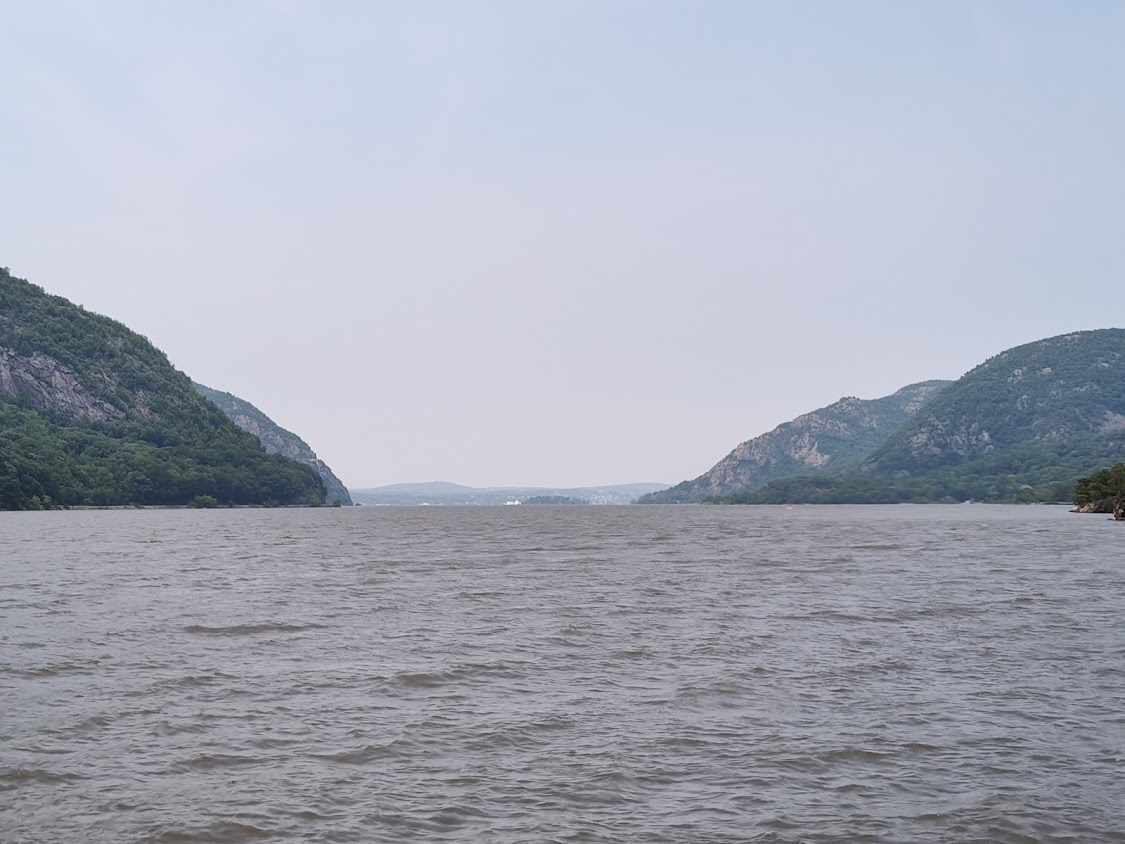
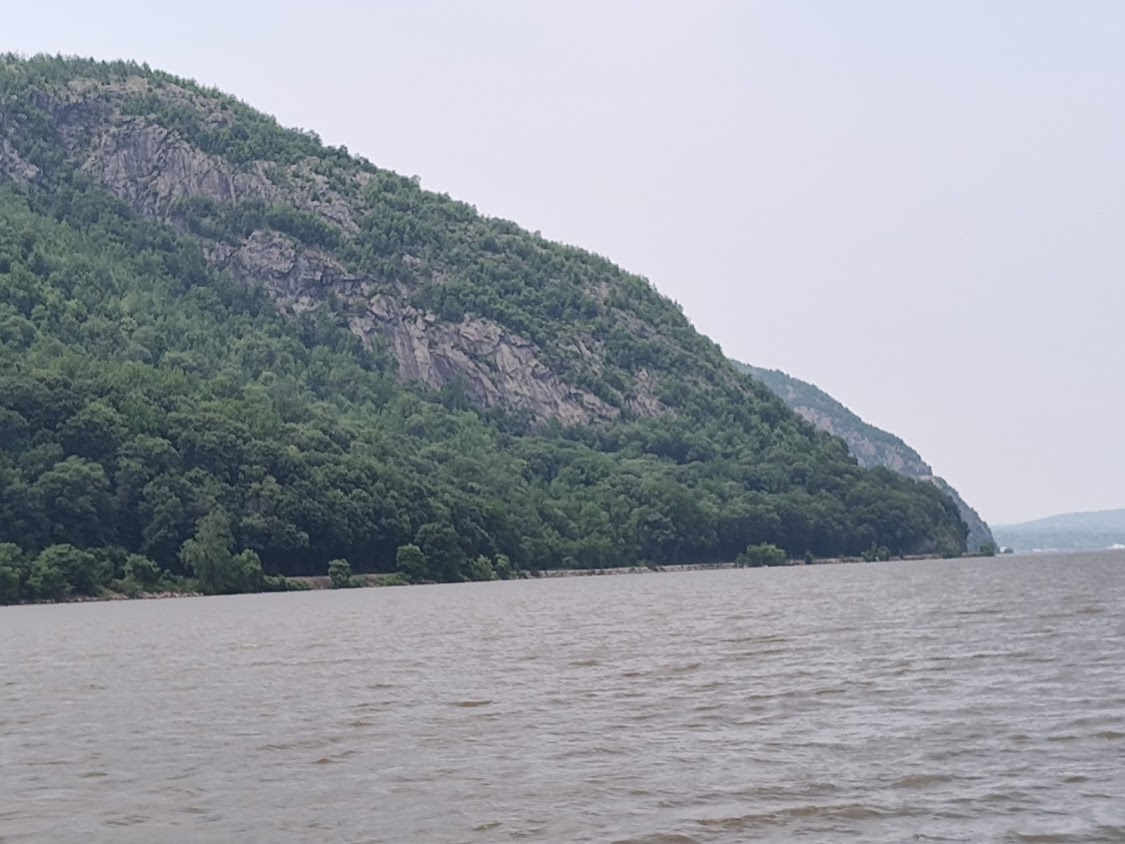
One curious sight was Bannerman’s Castle on Pollepel Island; though now in disrepair, it was a former military surplus warehouse.

We spent the night at Riverfront Marina in Newburgh then left early the next day (Sat., June 14) in drizzly rain. On and off, we continued to see passenger trains along the starboard shoreline carrying commuters north and south.
Esopus Lighthouse (built in 1871) pictured below is the only surviving wooden lighthouse on the Hudson. It was at this point that we started kind of recognizing some sights and even remembering the name Esopus, as this area, basically Kingston, NY, is where we’d purchased and kept “Exodus” for the first few years that we owned it.

The next lighthouse we would see (i.e., Rondout Lighthouse) at the end of Rondout Creek would be a very familiar sight to us, as it marks the entrance to the tributary in which we’d docked “Exodus” originally. It was strange to really recognize a place, as we hadn’t felt that since leaving parts of Ontario, Canada (with which we were familiar) at the beginning of our Great Loop journey.

Though a creek, this waterway is home to several marinas, the Hudson River Maritime Museum, restaurants along the shoreline (like Ole Savannah in below first picture), Feeney’s Shipyard, the tour boat, “Rip Van Winkle,” and even (news to us since being there) a cruise ship stop!


That evening, we took the inflatable over with with Chuck and Kim (“Til You Can’t”) to meet up with Rusty and Melissa (“Providence”) and Bob and Robin (“Livin It”) for a delicious dinner at a restaurant we used to frequent called, The Mariner.
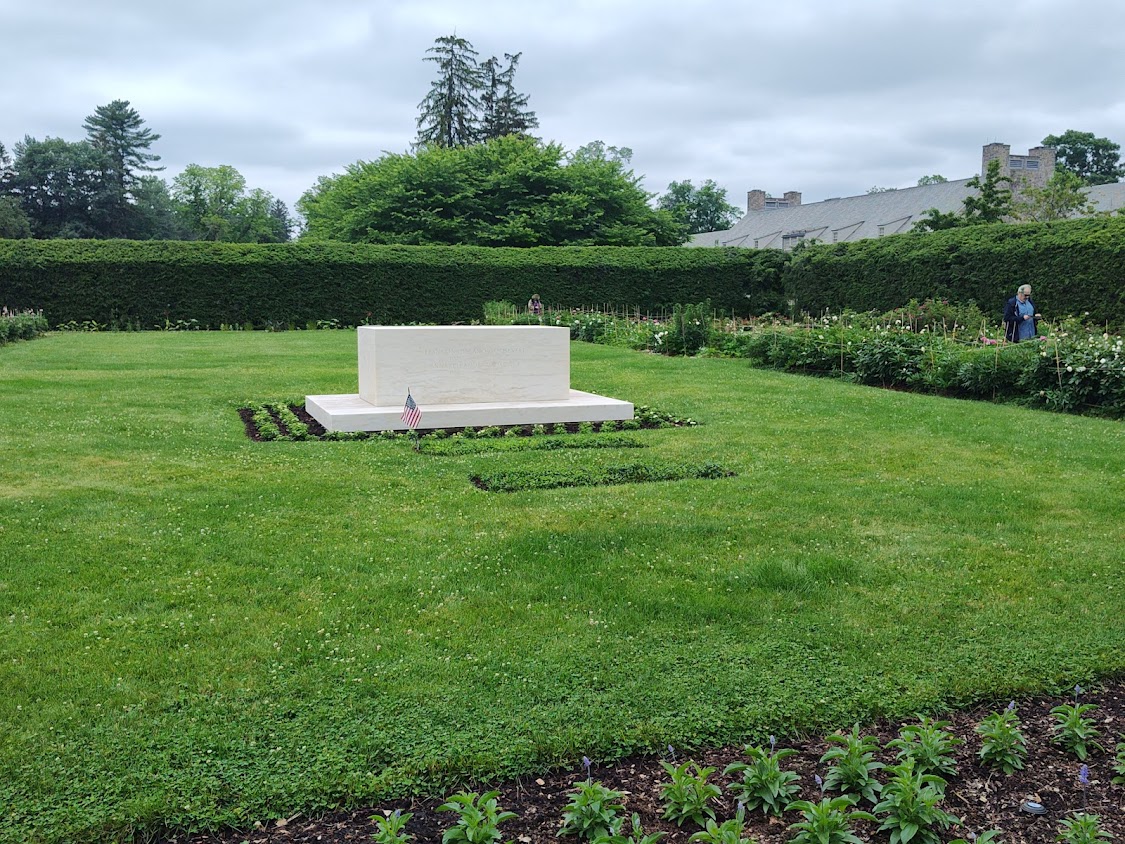
Sunday, June 15, was reserved for tourism. Joining Chuck and Kim, we took an Uber to the Roosevelt Library in Hyde Park where FDR’s family home serves as a museum and archive. By far the most interesting exhibit for me was this first draft of his speech to be delivered to a Joint Session of Congress on Dec. 8, 1941; it was dictated hours after learning of the attack on Pearl Harbor.

Included below are pictures of the gravesite, stables, and home.
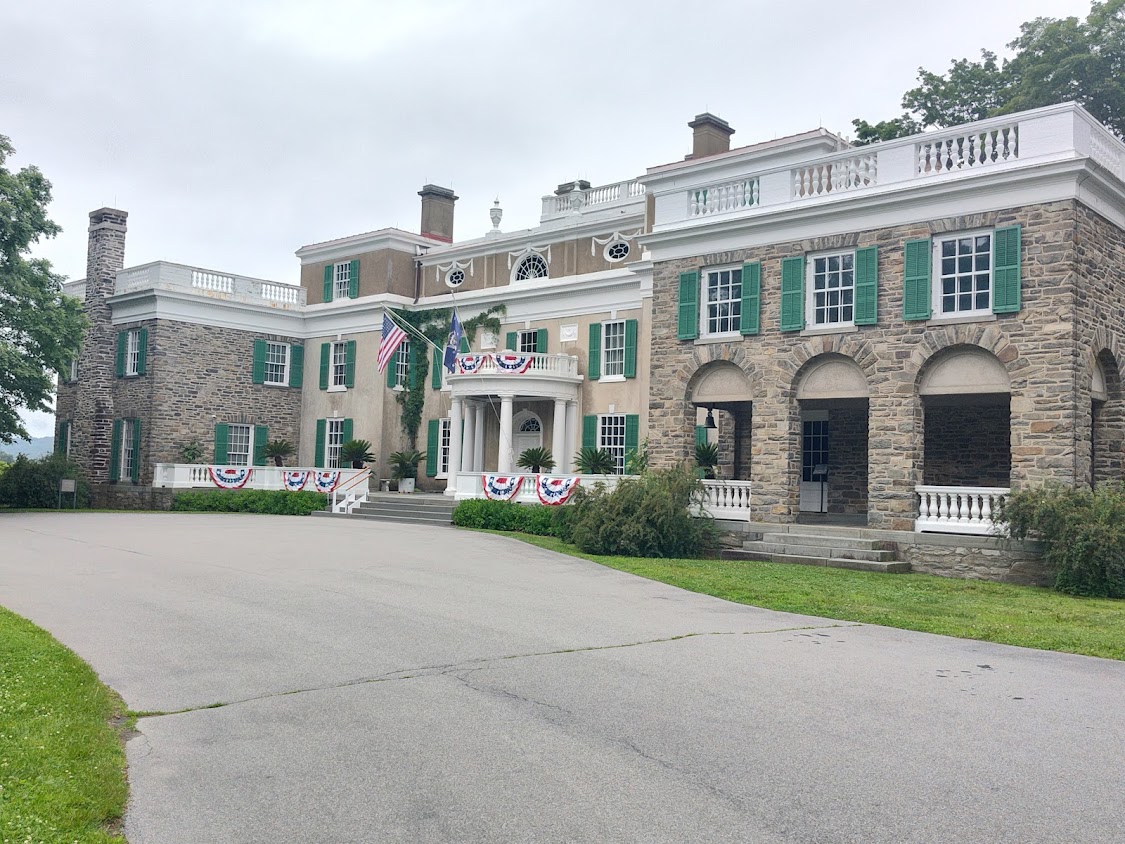
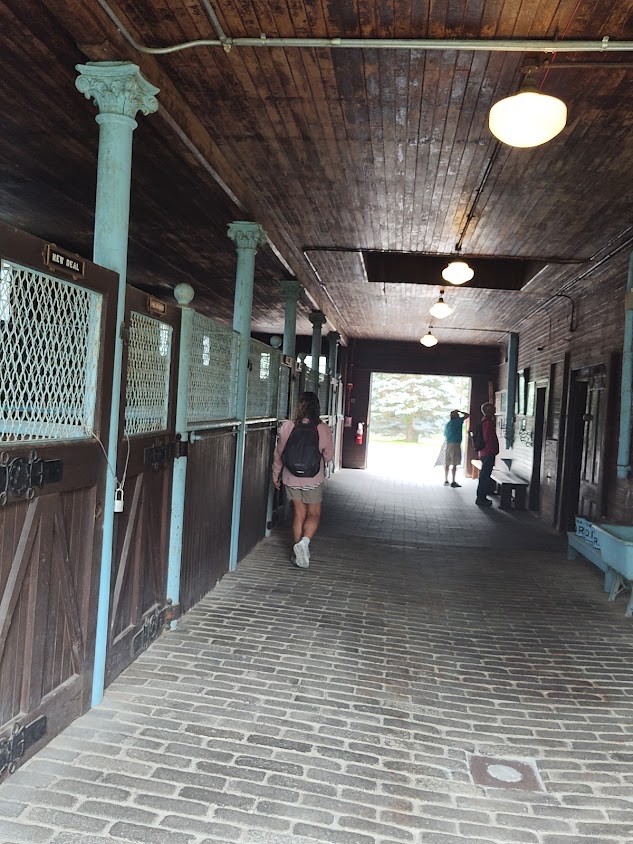
Leaving the presidential library, we then headed to the Vanderbilt mansion. The 54-room mansion was built for Frederick and Louise Vanderbilt between 1896 and 1899 and very much reflects the Gilded Age in which they lived. Everything inside was jaw-dropping in its opulence.


The back of the house overlooks the Hudson.


The next day, Mon., June 16, we stayed closer to home and did a little exploring in the inflatable up and down Rondout Creek.


Chuck and Kim joined us in their dinghy.

Nelson has evidently learned to pose for his pictures now.

We passed under the (active) railroad bridge, saw Fenney’s shipyard, and also spotted evidence of the old canal wall. We got to do some “gunkholing” (i.e., exploring little inlets) like we’d done on the inland rivers.


We went all the way to the waterfall at the end and then made our way back.

That evening, we again took the inflatable over to dinner, this time meeting Kim and Chuck (“Til You Can’t”), Kate and Andrew (“Tortuga”), and Dan and Sharon (“Arcadia”).
It was pouring rain the next morning, Tues., June 17, when we left for the Catskill Yacht Club, but the rain did slow during the day. Our friends Don and Dee from our home marina live near Catskill and had arranged with a friend of theirs who is a member of the yacht club for us to have a transient slip for the evening.

We knew we were in the right spot when the slip’s owner’s name was Nelsen (spelled a bit differently, however)!

We had a great time catching up with Don and Dee over dinner at the Port of Call restaurant in Catskill. The same cruise ship we’d seen on Rondout Creek, the “American Eagle,” was docked right next door. Not sure if they’re following us or we’re following them!


Having never been to Catskill before, we took the opportunity the next morning (Wed., June 18) to walk to town.

Interestingly, on display throughout the downtown area from Memorial Day to mid-Sept. are fiberglass statues of cats. Each cat is a unique rendition by an artist and sponsored by a local business. The cats are then auctioned at the end of the season as a fundraiser for the Heart of Catskill Association.

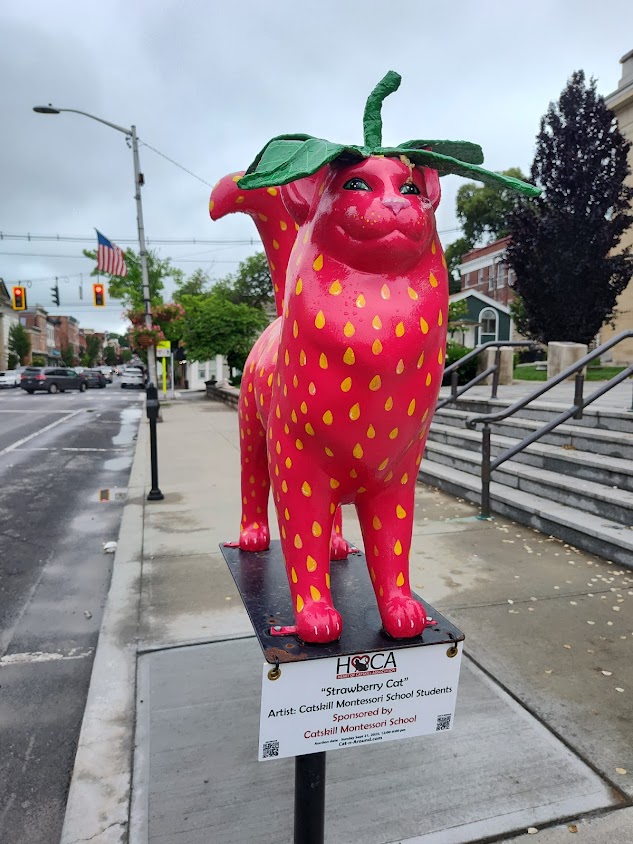
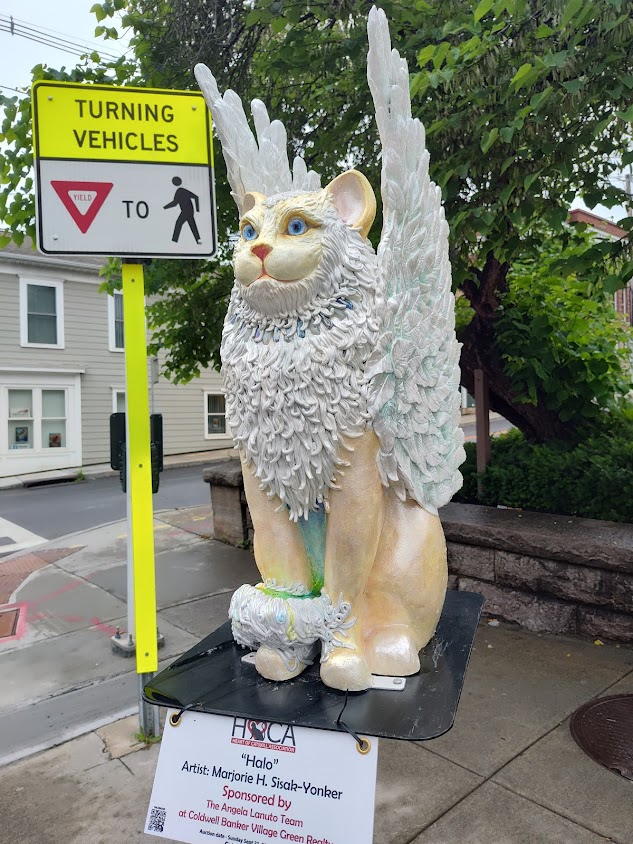
After our brief tour of the town, we headed out for Shady Harbor Marina in Baltimore, NY, passing the Hudson Lighthouse, currently under repair.

Though we’ve had so much rain lately, which is unfortunate given that it masks somewhat the beauty of the Hudson River shoreline, we were rewarded with a rainbow once docked at Shady Harbor.

Because we’re getting closer and closer to the end of our Great Loop journey, I thought I’d better dig out our AGLCA 2025 Fleet T-shirts which list boats actively doing the Loop this year. It won’t be long until we can wear them as “Gold Loopers,” meaning those boaters who have completed the Great Loop and now fly a gold burgee (flag) on the bow.

We were up early on a very windy and cloudy Thurs., June 19, our last day on the Hudson. As we were trying to get away from the dock in the wind, we ended up drifting into the boat behind us (“Eclipse”) owned by Tom and Fran whom we’d met at Liberty Landing. We will forever remember Shady Harbor for that moment. No damage done, thankfully, except to our pride.
Approaching Albany, where we’d lived for three and a half years, we were again struck by being able to recognize things: the Port of Albany; the USS Slater (a destroyer now museum which we’ve toured); the State University of New York (SUNY) office building; “The Egg,” a performing arts center in NY’s Empire State Plaza; and the conspicuous U-Haul truck atop the rental store.


We reached Waterford where the Hudson and Mohawk Rivers converge. It is also where the eastern most part of the Erie Canal begins. The next blog update will cover our trip through the Erie Canal and onward to our home port!